FREQUENTLY ASKED QUESTIONS
Experiential Education
What does "experiential education" mean, and which schools in Boulder offer it?
Experiential education is an approach built on research into how people actually learn: through curiosity, real-world experience, and hands-on projects, rather than lectures and standardized testing alone. Watershed School is Boulder County's only private, expeditionary school built entirely around this model for grades 6-12.
Is Watershed School a progressive school?
Yes. Watershed's academic program is organized around Skills courses and Expedition courses that work together: Skills courses build the tools students need (math, writing, research, communication), and Expedition courses put those tools to use on real, transdisciplinary questions in the world. Learning happens through fieldwork, community projects, and travel as often as it happens in a classroom.
What's the difference between progressive and traditional private schools in Boulder?
The difference is in how the day-to-day learning is structured. Many private schools organize the year around a fixed subject curriculum and periodic testing. Watershed's model instead starts with a real question or challenge, then draws in the math, writing, science, or history needed to work through it. Both approaches can be academically rigorous; they simply build that rigor in different ways.
Is progressive education good preparation for college?
Absolutely. 100% of Watershed graduates have been admitted to college. Just as importantly, Watershed students develop the skills they need to thrive in college and beyond. The World Economic Forum’s Future of Jobs Report 2025 identifies analytical thinking, adaptability, leadership, creative thinking, and self-awareness among today’s most valued core skills. Through hands-on learning, fieldwork, collaborative projects, and self-directed study, Watershed students build these skills while developing curiosity, resilience, and the confidence to take on real-world challenges.
Comprehensive (All-Inclusive) Tuition
What is "comprehensive tuition"?
Comprehensive tuition means the tuition you pay covers everything: all academic and advisory programs, course materials, all experiential programming, and the full cost of domestic and international travel, including airfare for May Term expeditions. Families are not billed separately for trips.
What isn't included in Watershed's tuition?
Personal school supplies, personal gear for orientation trips (backpack, sleeping bag, water bottle), a personal laptop, and fees specific to certain teams and clubs, e.g. the Climbing Team. Families with demonstrated financial need can talk with our tuition assistance office about support for these costs as well, not just tuition itself.
Which private schools in Boulder include travel in tuition?
Watershed is the only Boulder-area private school that builds fieldwork and travel directly into tuition rather than charging separately for expeditions.
Is Watershed more expensive than other Boulder-area private schools once travel is factored in?
Often, no, once you account for what's actually included. A Watershed student who attends 9th through 12th grade takes part in 4 orientation trips, 4 Extended Fieldwork courses, and 4 May Terms, all covered by tuition. Watershed estimates the market value of comparable travel and fieldwork programs purchased separately would total more than $40,000 over four years, or roughly $10,000 per year, on top of a typical school's base tuition.
Does Watershed offer financial aid or tuition assistance?
Yes. Roughly 20-25% of Watershed families receive tuition assistance based on demonstrated financial need. Applications go through Clarity Financial Aid, and the process includes a short online application, a $65 fee, and standard income verification.
What is Watershed's tuition for 2026-2027?
Middle School (grades 6-8): $37,500 Upper School (grades 9-10): $39,900 Upper School (grades 11-12): $40,700
Outdoor & Experiential Education
What is expeditionary learning at Watershed?
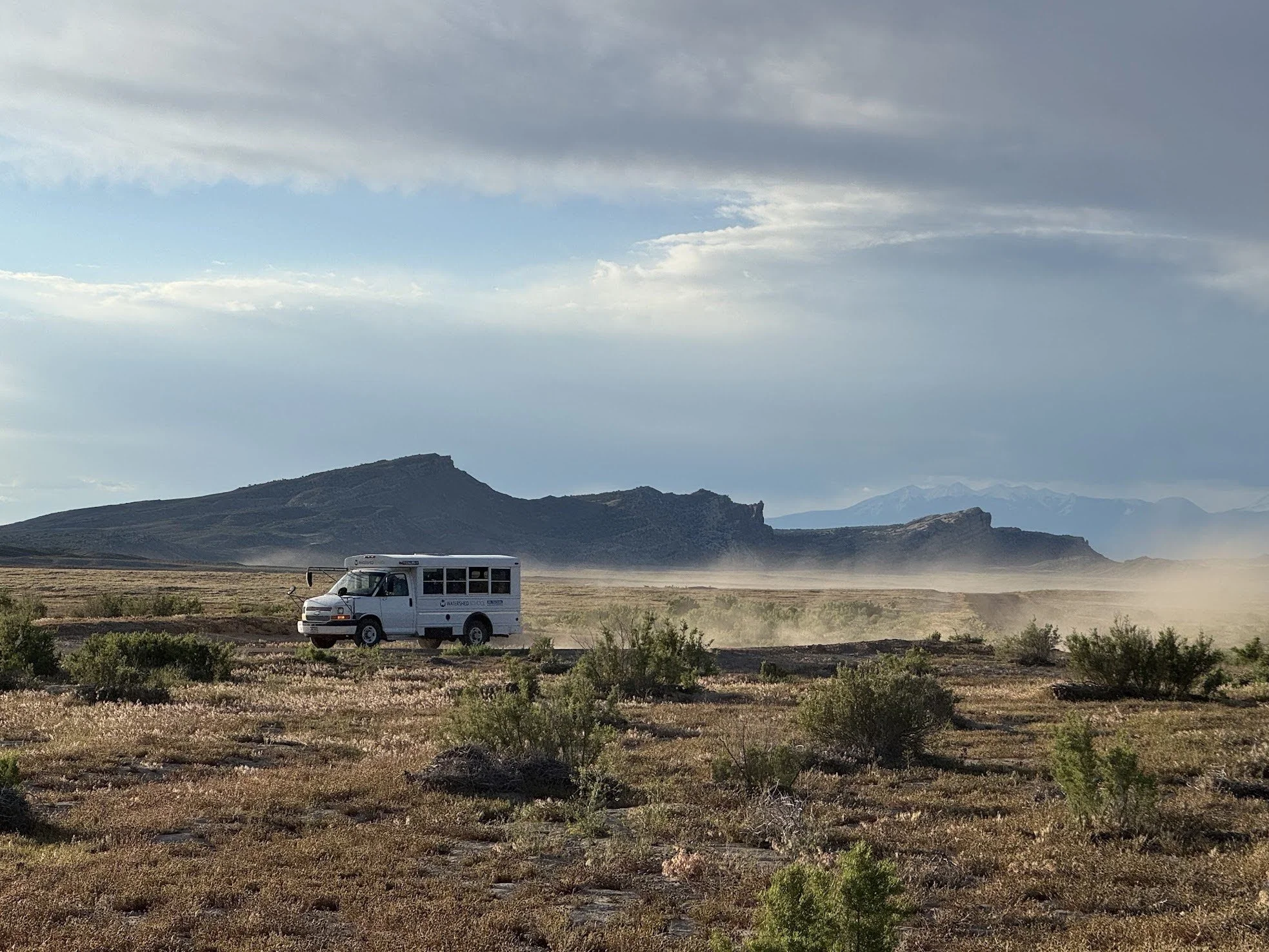
At Watershed, going into the field isn't an elective, it's built into every student's core program through three connected experiences: Orientation, Extended Fieldwork, and May Term. All of it, including travel and airfare, is included in comprehensive tuition.
What is Orientation?
Every student starts the school year in the field. Upper School students spend seven days backpacking and camping in the Colorado backcountry; Middle School students spend four days car camping and exploring nearby wilderness areas. Orientation builds close-knit advisory groups and lays the groundwork for the fieldwork and travel that follows through the year.
What is Extended Fieldwork?
Each fall, students spend several days on Extended Fieldwork, applying what they're studying in class to a real place and a real question. Trip length varies by grade and by year: Upper School courses typically run five days, while Middle School trips run shorter in some years and longer in others (a full week this year). Past Upper School courses have taken students to conduct bird censuses in South Texas, examine immigration policy at the U.S./Mexico border, collect freshwater samples on Colorado's Western Slope, and study class and equity in partnership with communities in Pine Ridge, South Dakota.
What is May Term?
May Term is a month-long program of immersive, one-credit courses open to both middle and upper school students, each including 5-16 days of travel alongside on-campus coursework. Courses span the sciences, humanities, and languages: recent offerings have taken students canoeing 100 miles down Utah's Green River to study water policy in the American West, retracing the Lewis and Clark route by canoe on Montana's Missouri River, traveling the American South on a Civil Rights history expedition, hiking Japan's historic Nakasendō Trail while partnering with a rural revitalization nonprofit, living on a women-run coffee farm in Costa Rica to study sustainable enterprise, and living with host families in Xi'an and Hangzhou, China to build cross-cultural understanding through direct engagement with local communities. Course offerings rotate and change as global events and opportunities shift.
Do students need prior outdoor/travel experience to attend Watershed?
No. Orientation is designed to build those skills starting a student's very first week, and most May Term courses have no prerequisites. A handful of higher-intensity courses, such as ones involving technical rock climbing, extended paddling, or long home stays, do require students to demonstrate proficiency in certain skills, physical fitness, or a high level of maturity to be selected. These requirements are noted for each course description individually.
Does Middle School take part in outdoor education too?
Yes. Middle school students take part in Orientation, Extended Fieldwork, and dedicated May Term courses of their own, and 8th graders complete Passages, a rite-of-passage backcountry experience marking the transition into upper school. Extended Fieldwork length can vary by grade and by year. Upper school adds a wider range of May Term expeditions, including international options, on top of that.
Learning Specialist & School Psychologist / Academic and Mental Health Support
Does Watershed School support students with learning differences?
Yes. Watershed recognizes that students learn in different ways and that a diversity of learning profiles can strengthen a school community.Watershed’s learning specialist supports students with mild to moderate learning differences by providing accommodations and coordination with outside providers where needed, working with students in small groups, one-on-one, and within the classroom to help them understand how they learn best, build effective strategies, and access the curriculum successfully. Students do not necessarily need a formal diagnosis to benefit from support.
Is Watershed School a special education school?
Some students receive individualized academic support through the learning specialist, in the same way many schools provide accommodations, but this is one part of a broader, academically rigorous program rather than the school's primary focus.
What kind of academic or mental health support does Watershed offer?
Watershed has two dedicated support roles: a learning specialist who provides academic support in small groups, one-on-one, and in the classroom, and a school psychologist who holds a doctorate in psychology and supports students' mental health and individualized learning plans. The psychologist supports students in school, consults for travel and fieldwork, coordinates with outside providers and services, and communicates with parents and school institutions for the development of learning supports and plans. Because Watershed is an intentionally small program, admissions conversations include a discussion of a prospective student's needs to make sure Watershed's resources are the right fit.
Safety & Risk Management
Is expeditionary travel safe for middle and high school students?
Watershed takes a comprehensive approach to risk management for every domestic and international trip, and the school is direct that risk can be managed but never fully eliminated. That approach includes certified, experienced instructors, established in-country partnerships, a 24/7 administrative support team, and ongoing monitoring of international safety and health resources. Each May Term course also publishes its own physical and resiliency ratings and prerequisites, so families know what a specific course involves before applying.
How does Watershed prepare students for backcountry or international trips?
Preparation starts on day one. Orientation, in a student's very first week, is designed to build the outdoor skills and group trust that later fieldwork and travel depend on. Courses with more demanding conditions (high altitude, technical climbing, extended paddling) list specific prerequisites, and students are placed into courses partly based on their prior travel experience with Watershed.
Who leads Watershed's trips, and how are they trained?
Every instructor team includes trip leaders who have traveled and worked in the course's specific location, have the language skills needed to communicate clearly there, and have experience managing groups in the field. All courses are led by instructors certified in Wilderness Medicine, trained to handle both medical issues and emotional health in the field. Many Watershed trip leaders have also taught the students on their trip for years, so groups travel with staff who already know them well.
What happens if there's a medical emergency during a trip?
Watershed partners with International SOS (ISOS) for 24/7 medical consultation and emergency support, and instructors carry researched information on in-country medical facilities along with access to telehealth support. Watershed's administrative team, led by the Director of Experiential Programs, is on call 24/7 while any course is in the field.
How does Watershed decide a trip is safe to run?
Before any course departs, Watershed's Risk Management Committee reviews it, and instructor teams hold risk management meetings with the Director of Experiential Programs that include tabletop scenario planning. Watershed also monitors ongoing security and health conditions at every trip destination through sources including the U.S. Department of State, the Overseas Security Advisory Council, the World Health Organization, and the CDC.
Who runs Watershed's international partnerships and homestays?
Watershed builds long-term partnerships with in-country and on-location organizations, returning to the same communities year after year rather than arranging new logistics each trip. Homestay families and local partners are vetted through these established relationships, and when Watershed develops a new course, staff scout the location and partnerships as part of that process.
Assessment & Grading
Does Watershed School give traditional letter grades?
Not in the way most schools do. Watershed assesses students against proficiency levels (Beginning, Developing, and Accomplished ranges) tied to clear learning targets in each course, rather than averaging each assignment. At the high school level, those proficiency levels are converted to a GPA so students can apply to college with ease. Watershed does not rank students or report GPA on regular progress updates.
How do parents track their child's progress at Watershed if there aren't regular grades?
Our assessment system is a proficiency-based model that gives students and families a clear view of growth through meaningful teacher feedback rather than numerical scores. Each student has a two-part Student Assessment Report in Google Classroom: the left side tracks habits and skills, while the right side shows proficiency ranges (accomplished, developing, beginning) with project feedback and rubrics explaining each rating. Teachers update the report early in the semester, students review it mid-semester to prepare for Student-Led Parent Educator conferences, and a final update with a written narrative and proficiency is entered in Veracross at semester’s end. Students also present their own learning twice a year at FAIR (Festival of the Arts and Intellectual Reflection) and RoLs (Reflections on Learning).
What is a SHEDTalk?
A SHEDTalk is the presentation students give as part of FAIR (Festival of the Arts and Intellectual Reflection), Watershed's semester-end showcase of student learning. Each semester, students prepare and deliver a SHEDTalk focused on either their coursework or their growth against Watershed's Portrait of a Graduate, presenting to an audience of students, educators, and parents. SHEDTalks are assessed like any other presentation or exam, and students practice and receive feedback before presenting.
What are student portfolios at Watershed?
Every student builds and maintains a digital portfolio for each course, capturing their process, reflections, and finished work. Portfolios are used in student presentations to demonstrate progress against the skills and character strengths in Watershed's Portrait of a Graduate, and they double as a record of growth that follows a student across their whole time at Watershed.
Class Size & Community Size
How many students attend Watershed School?
Watershed enrolls approximately 112 students across grades 6-12.
What is Watershed's student-to-teacher ratio?
7:1, with an average class size of 12 students.
How experienced are Watershed's teachers?
Watershed faculty average 14 years of teaching experience, 71% hold advanced degrees, and the school retains 95% of its faculty year over year.
Does Watershed partner with outside organizations for real-world learning?
Yes. Watershed works with ~75 community partners each year, integrated directly into coursework rather than offered as optional extracurriculars.
Middle School in Boulder
What is the best middle school in Boulder for a curious or independent kid?
Watershed School is Boulder County's only private, expeditionary middle school for grades 6-8, built around hands-on, project-based learning rather than a traditional lecture-and-test format. Students take part in humanities expeditions, science labs, fieldwork, and studio art designed to engage multiple ways of learning, alongside a dedicated focus on building character traits like grit and empathy.
Are there private middle schools in Boulder with small class sizes?
Yes. Watershed's average class size is 12 students, with a 7:1 student-to-teacher ratio across the school.
What does a typical middle school year look like at Watershed?
Middle school begins with a four-day camping trip that builds community and confidence. From there, overnight expedition trips connect classroom learning to the real world, and a May Term course adds a week or more of travel. Each day starts with skills courses in Math and Spanish, followed by electives in Arts, Technology, Writing, and Athletics. Afternoons are devoted to Humanities and Science Expedition Courses, which are transdisciplinary: students dive deep into a single topic through the lenses of science, social science, and language arts.
Does Watershed's middle school prepare students for high school?
Yes, and without a second admissions process. As Boulder's only 6-12 independent school, Watershed students move directly from 8th grade into the upper school as part of the same close-knit community, rather than reapplying elsewhere for high school.
Upper School / High School in Boulder
What are the best college-prep high schools in Boulder, CO?
Watershed School is Boulder County's only private, experiential high school for grades 9-12. Every graduate is accepted to college, and the school builds college readiness through research, communication, and independent project work rather than a standard lecture-and-test curriculum.
Are there small private high schools in Boulder County?
Yes. Watershed's upper school keeps the same 7:1 student-to-teacher ratio and 12-student average class size as the rest of the school, and students stay in the same advisory group with the same small group of peers from their first day through graduation.
What upper schools in Boulder offer travel or study-abroad as part of the curriculum?
Watershed is the only one in the area that builds travel directly into every student's coursework rather than offering it separately. Every upper school student takes part in May Term, with past program sites including China, Japan, Costa Rica, the Grand Canyon, Guatemala, Hawaii, Iceland, Peru, Vietnam, Mexico, the Southeastern U.S., Kenya, and more, along with an 8-day backcountry orientation trip and Extended Fieldwork each fall.
How does Watershed prepare students for college applications?
Watershed's college counseling is individualized, with the same counselor building relationships with each student over multiple years. The school submits a school profile directly to colleges each year to give admissions officers context on Watershed's program before a student's application arrives. Additionally, students begin a college prep seminar course during junior year to support them in the dreaming, planning and research process. The class continues through senior year as a step-by-step support process for students and families through the college application process from beginning to end.
What leadership opportunities do upper school students have?
Students can take on formal leadership roles through groups like the Academic Program Committee, Community Program Committee, Citizenship Committee, Prom Committee, and Head’s Council. But at Watershed, leadership also means taking initiative and having a voice in shaping your own experience. Students can design self-directed Independent Studies, pursue internships, start clubs and student-led initiatives, help shape courses and school decisions through regular feedback and reflection, and take on meaningful roles within the broader school community. These opportunities give students the freedom to identify what matters to them, take ownership of their ideas, and turn them into action.