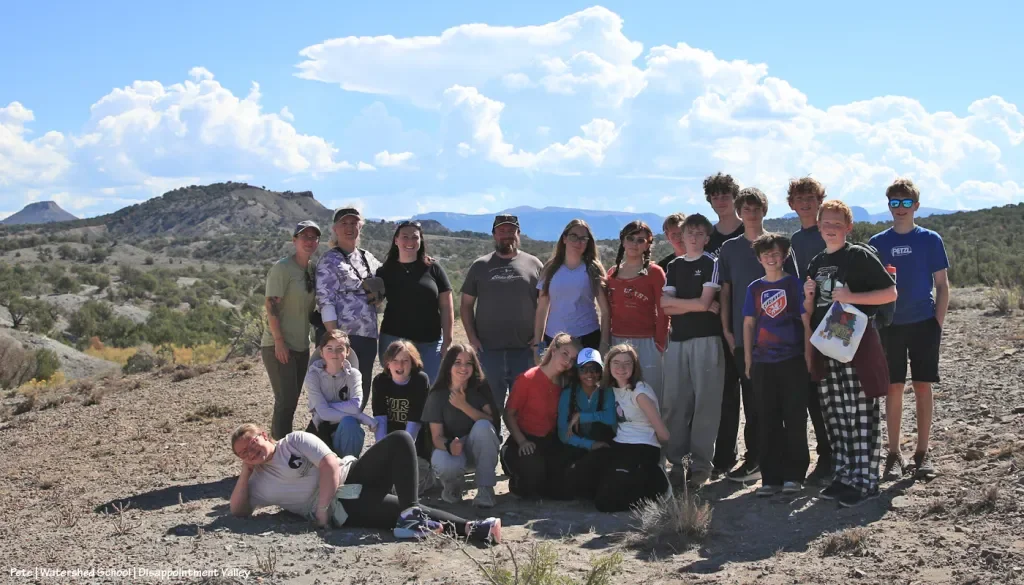
As part of Watershed’s middle school Mustangs & the American West Expedition course, students across grades 6-8 spent their week of Extended Fieldwork exploring wild horse management, conservation, and public lands. Sixth and seventh graders traveled to Calhan, CO, to visit the Mustangs Ambassadors Program, learning about mustangs and the people working to protect them. Eighth graders traveled to Disappointment Valley and the Spring Creek Basin Herd Management Area, where they worked alongside Bureau of Land Management staff to conduct vegetation monitoring and learn about public lands management.
TJ Holmes of Spring Creek Basin Mustangs captured the eighth graders’ experience in a wonderful blog post featuring incredible photos and reflections on the students’ curiosity, thoughtful questions, and engagement throughout the visit. Read the full post below!
Thank you to our students for bringing such energy and curiosity to this fieldwork, and to TJ and our partners for making these meaningful, real-world learning experiences possible!
Up and Coming
If these kids are representative of the country’s young folks, we’re all gonna be OK. 🙂
Earlier this week, Disappointment Valley and Spring Creek Basin – and one mustang band! – played host to a group of eighth-graders from Boulder’s Watershed School and three of their teachers. They got to see Buckeye’s band after a long drive from Meeker, where they’d camped after a great visit to the Wild Horse Refuge near Craig. Then they camped above Disappointment Creek, just outside Spring Creek Basin. In the morning, BLM range specialist and herd manager Anton Rambur and range tech Laura Heaton arrived to lead the students in a vegetation-monitoring project up the same hill. Tres Rios Field Office Manager Derek Padilla also came out to see and talk to the kids about the variety of land management that happens throughout BLM public lands in Southwest Colorado.
The kids spread out in small groups and pairs to conduct their utilization (grazed/ungrazed bits of galleta (a native, warm-season grass that’s growing after the recent rains) along lines of five steps at a time) under the watchful eye of Buckeye and the band.
And then, while they listened to Laura and Anton guide them about how to fill out their sheets with the information they’d gathered, Buckeye decided that he and the band were ready for their morning drink … which meant ambling up the trail … and giving the kids a good check-over … before heading down the other side of the hill to the water catchment.
Top THAT, any other school trip ever, anywhere! 🙂
We stayed up top to listen to Derek and give the horses a chance to get down the hill, to the catchment to drink the lovely fresh rainwater in the trough … and they came up a different trail back to the top of the hill, checked us out again and returned to grazing.
Oh, my lovely, wonderful, awesome and amazing mustangs. 🙂 You do me SO proud!
Then back down to the corrals and buses, where Anton and Laura helped them do the math involved in figuring out how much the horses are grazing in that area of the basin. At the end, I heard numbers ranging anywhere from 7 percent to 50 percent use/grazed plants, so even in our drought, we’re in good shape for the horses not eating everything in their paths. And the students learned a little bit about what BLM folks are looking at to manage the rangelands that support wild horses – and other grazing/browsing wildlife like elk, deer and pronghorns.
I got to talk more about PZP and show off my darting rifle and let some of the kids see how light it is and how quiet (no darts involved!). And I marveled the whole time at the insightful, curious questions the kids asked and the answers Anton and Laura gave to provide the kids with a well-rounded picture of what it takes to manage a herd of wild horses on public land in Colorado.
Ahhhhhhhhhhhhhhhhhhhhhh-mazing!
Here follow a load of pix of Watershed School students and teachers Amy, Diana and Pete, BLM’ers Laura, Anton and Derek … and the mustangs they got to see:
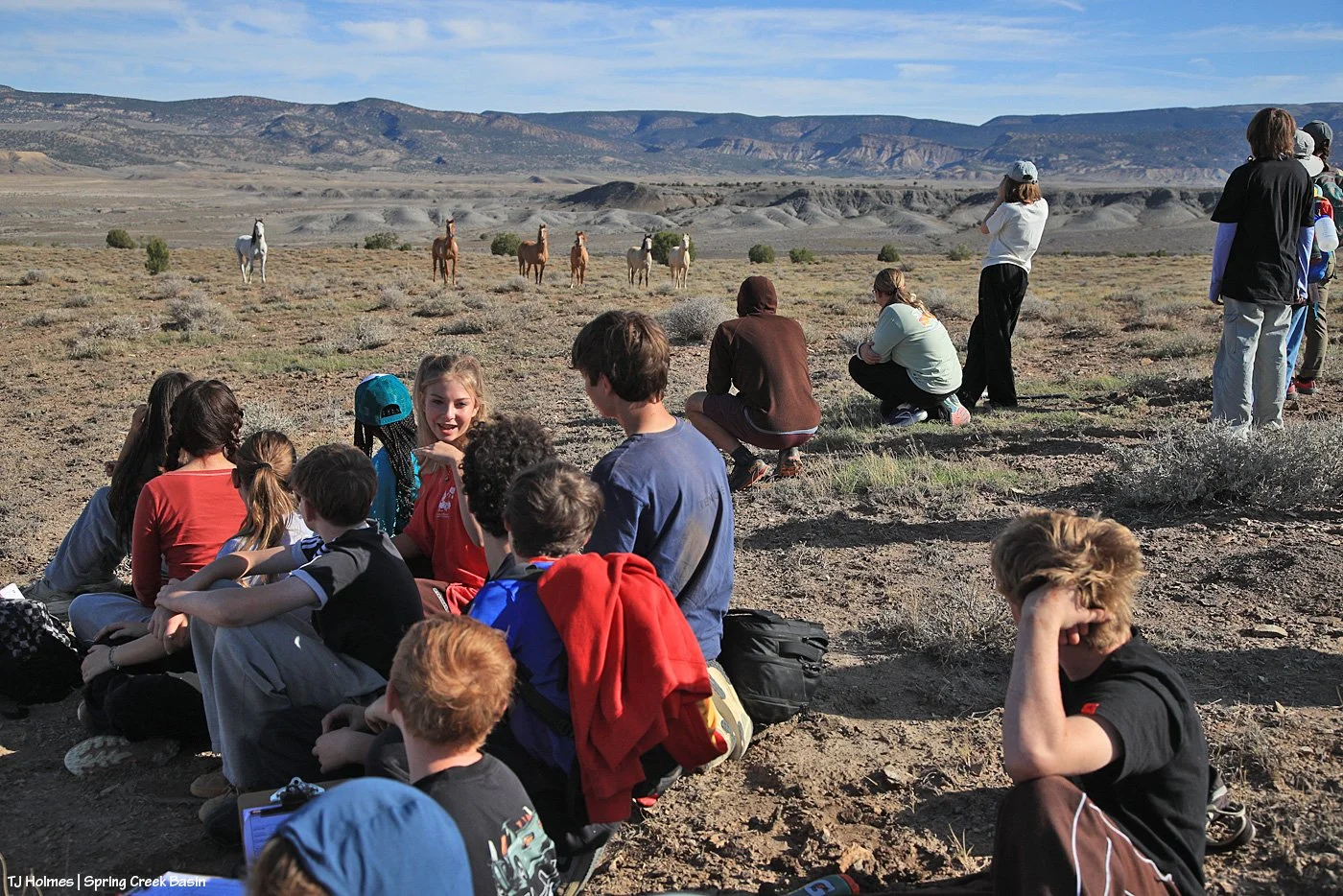
The gathered group of students and adults got the mustang sighting of their lives.
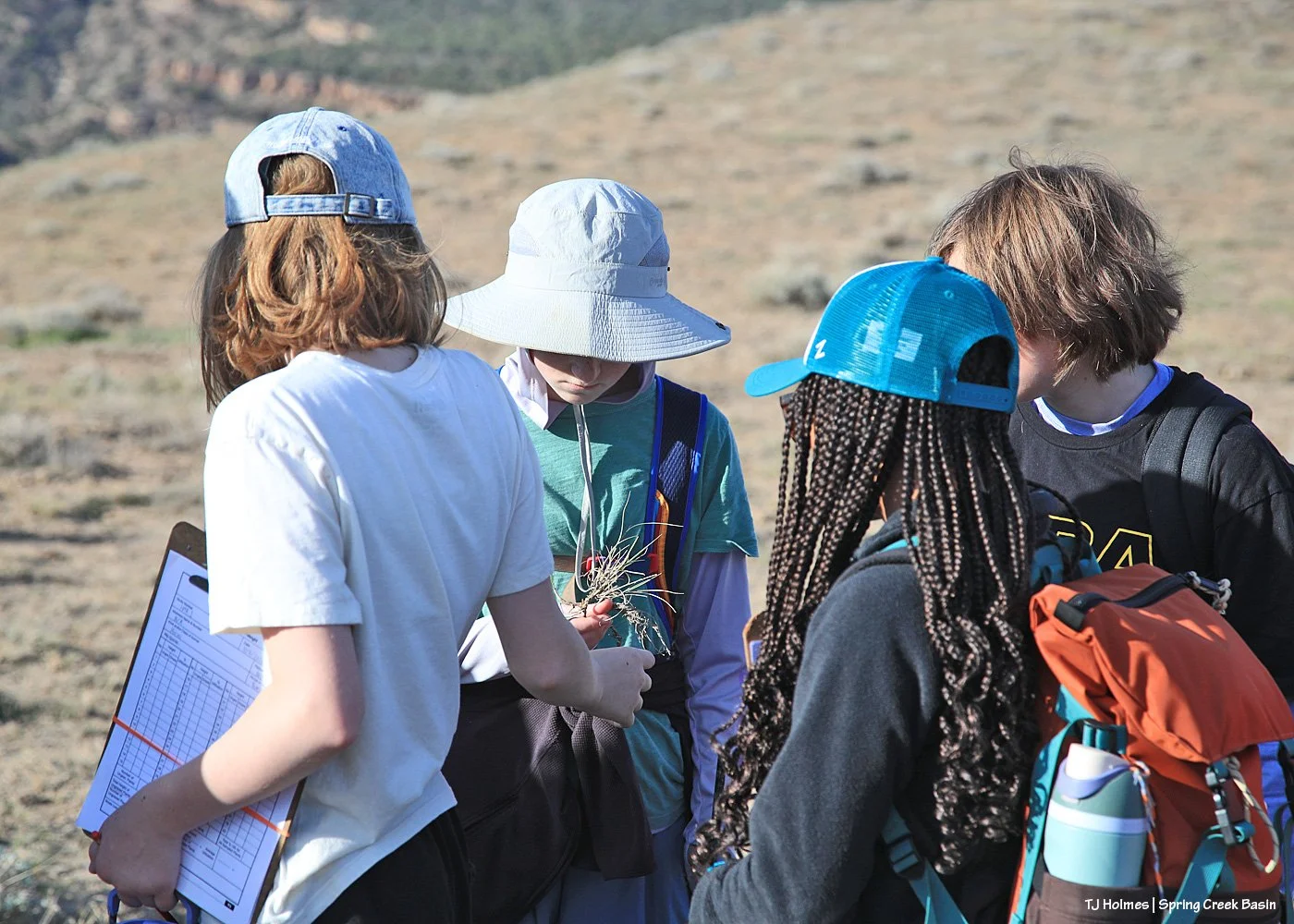
Students examine a clump of grass that shows last year’s growth as well as recent growth.
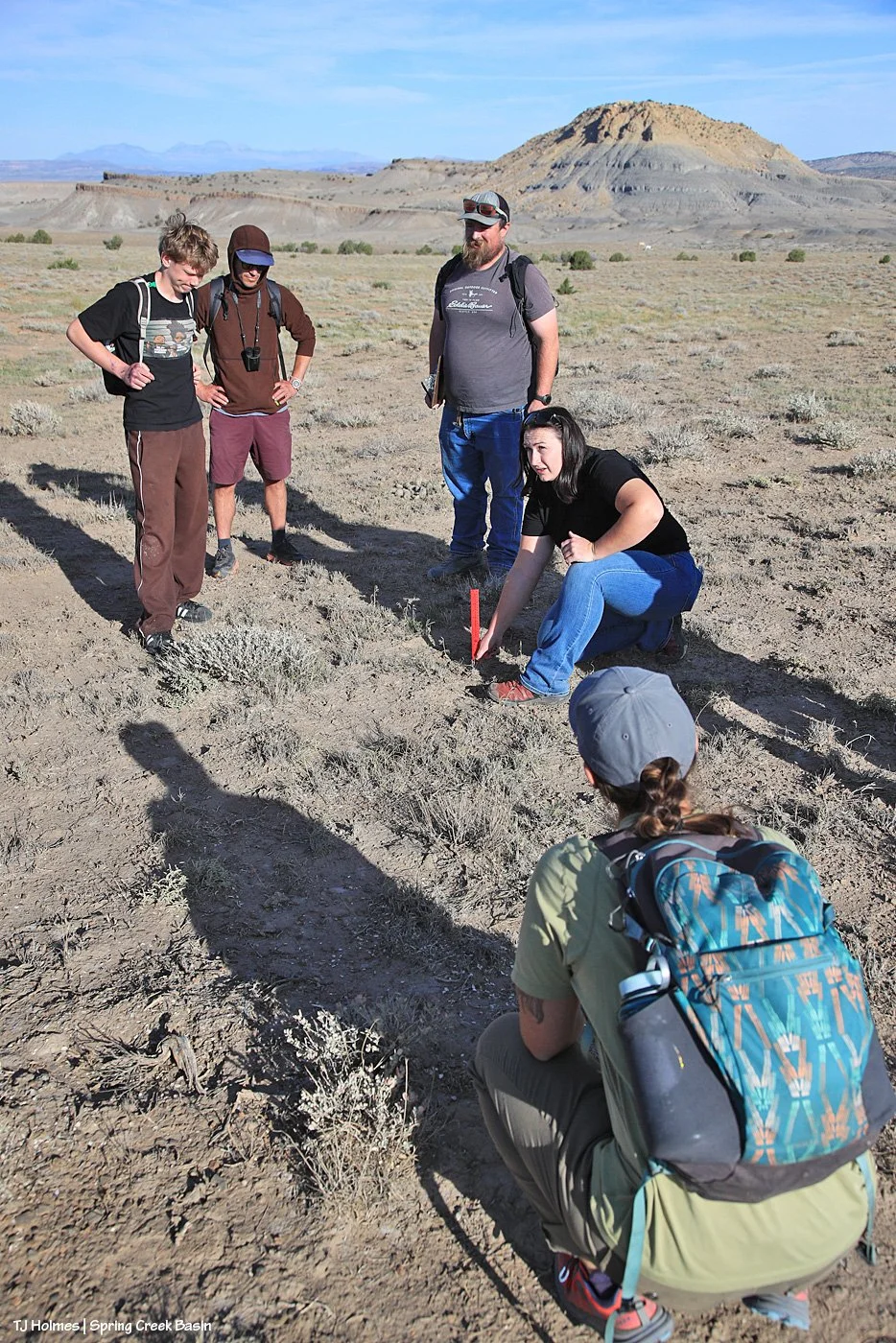
Laura and Anton talk about how to measure clumps of grass. The idea was that the students walked five steps in a line, measured galleta at their toe or within reach … then another five steps … until they’d measured 10 samples. Teacher Amy is in the foreground (this is the second time she has brought one of her eighth-grade humanities classes to Spring Creek Basin; the last time, it poured rain! as you can see in these pix, they lucked out with spectacular October weather), and teacher Pete is in the brown hoodie and camp. … Start to notice the “little white dots” in the distance.
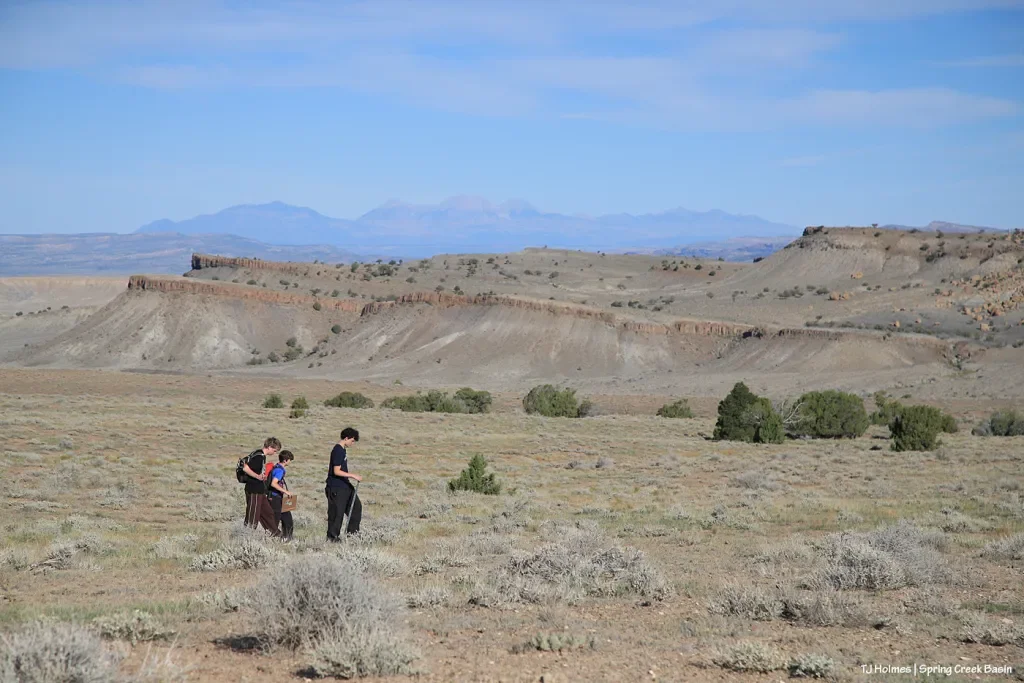
Boys walk their line with the basin’s south-facing rimrocks in the near distance and Utah’s La Sal Mountains in the far distance.
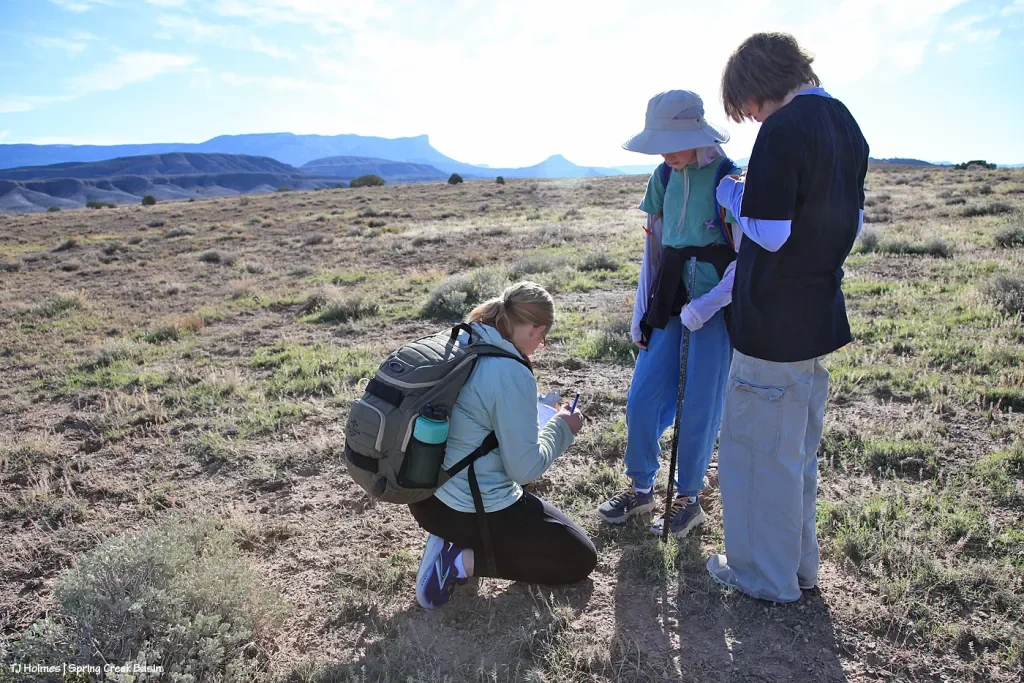
It’s hard to get a whole lot farther from Boulder than Disappointment Valley (OK, we’re not the farthest southwest corner of the state), but students were focused on the vegetation and their project. How cool is it that they’re able to take trips like this instead of learning from books only, only in a classroom?
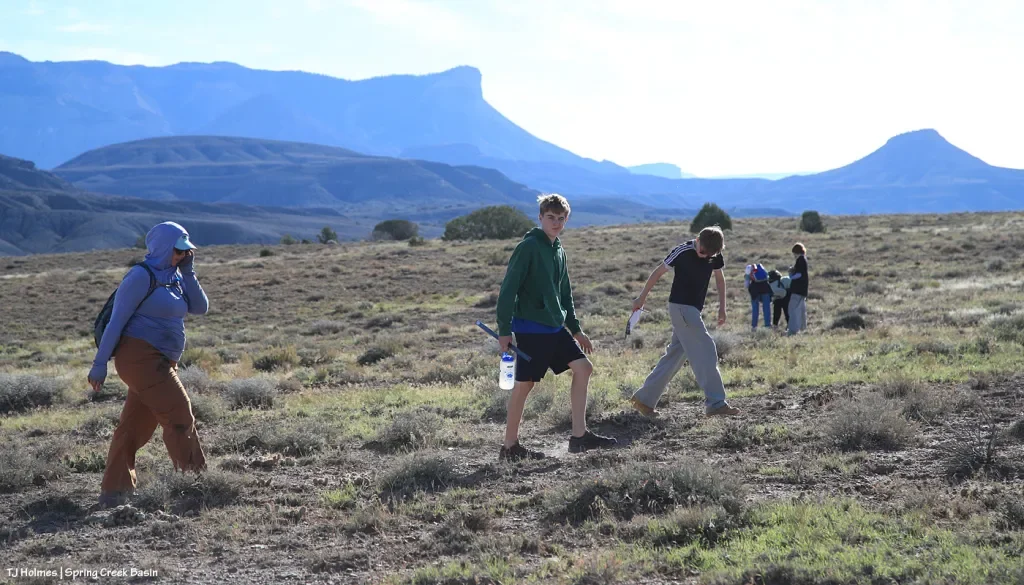
Diana follows the boys back up the hill after they finished their line. Can’t get enough of that scenery.
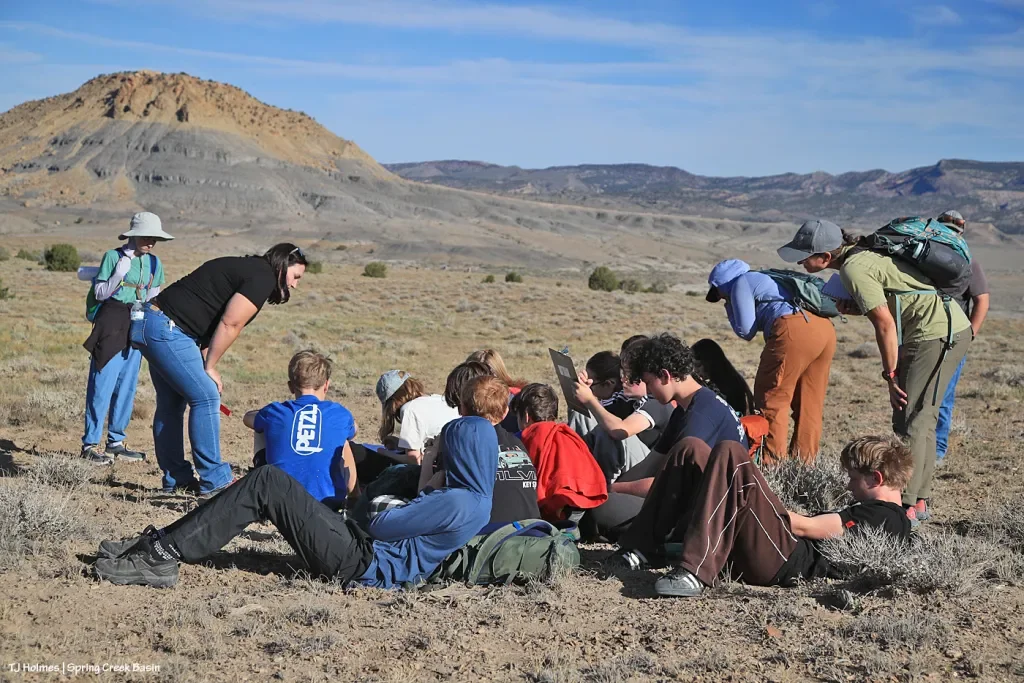
Laura, left, and teachers Amy and Diana helped the kids with their utilization sheets (these are the same that BLM employees use while out monitoring rangelands). They’re a little hard to see, but look straight out over the kids’ heads. …
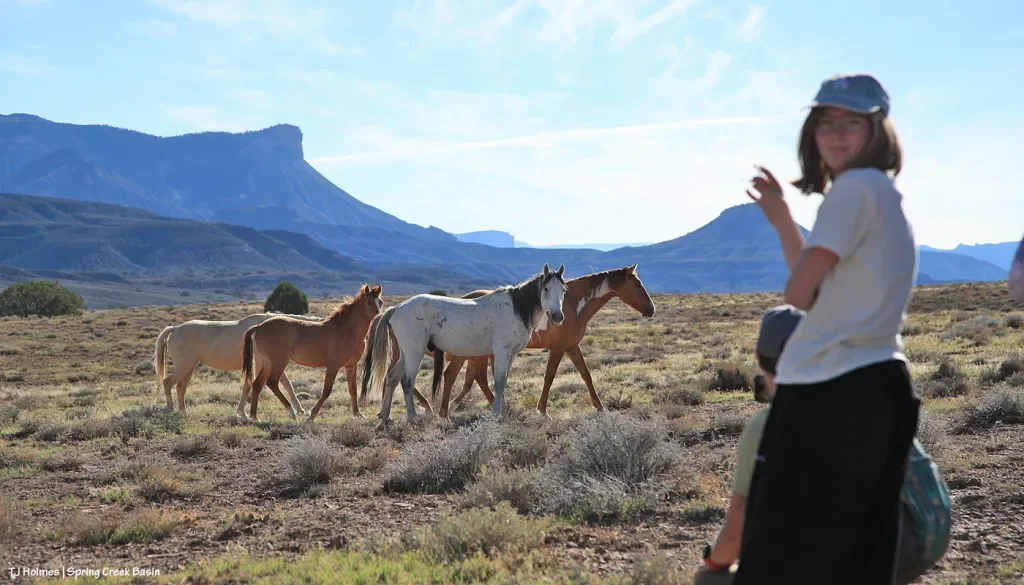
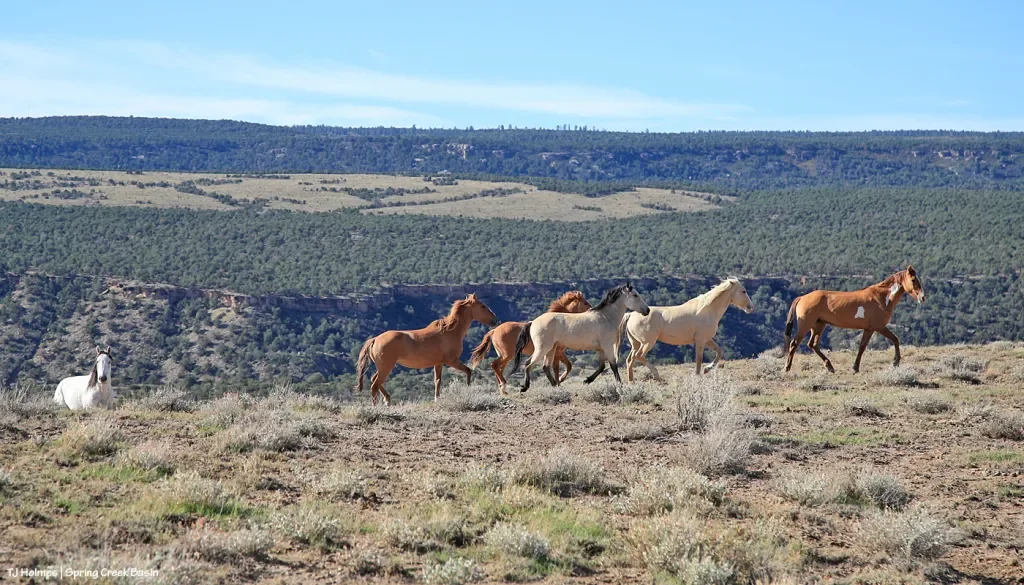
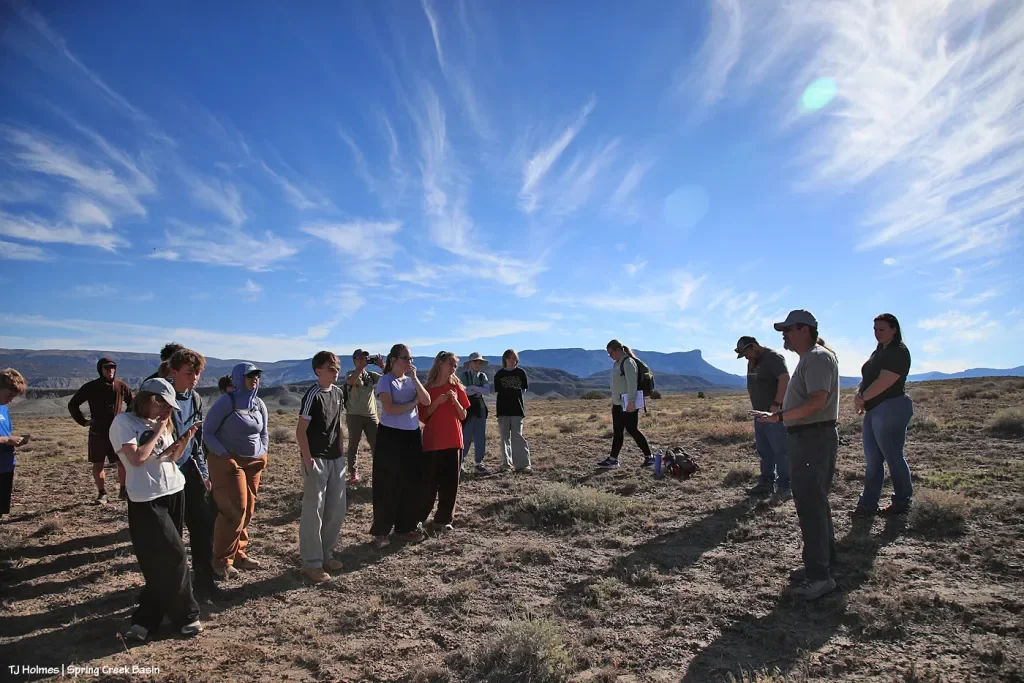
While we were watching Buckeye’s band watching US, Tres Rios Field Office Manager Derek Padilla hiked up the hill to join us. He talked to the students about the variety of jobs available with the Bureau of Land Management (and U.S. Forest Service, where he spent the first 27 years of his 30-year land-management career) and the variety of ways BLM’ers manage the multiples uses that happen on public lands.
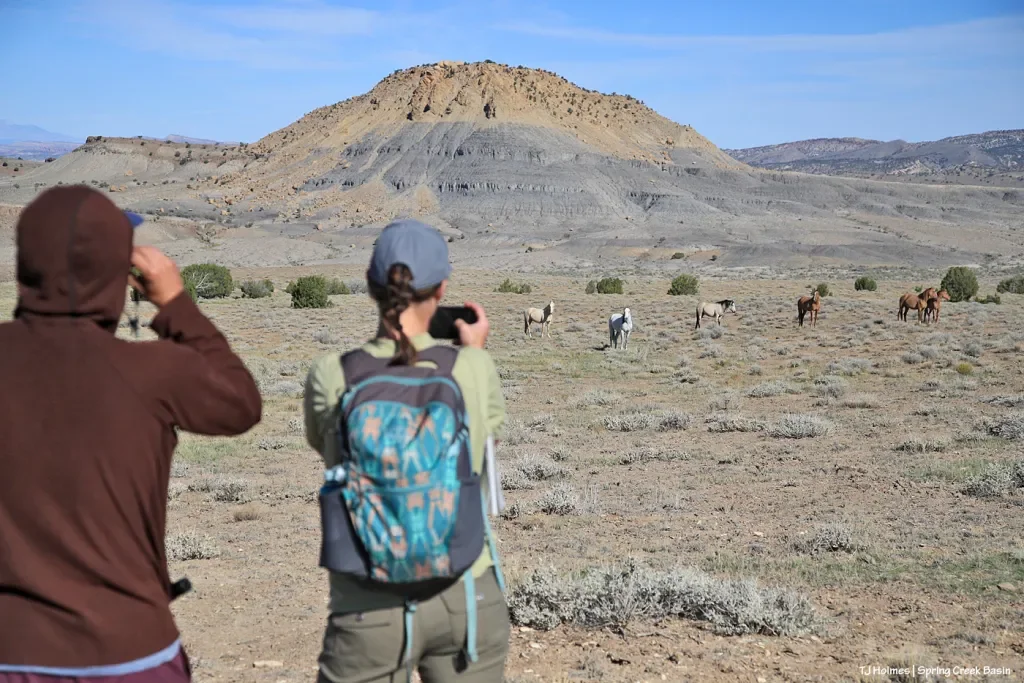
After one last farewell to the ponies, the group returned down the hill to the buses to complete the math (!) part of the project and have some lunch and a last round of questions and answers with Laura and Anton.
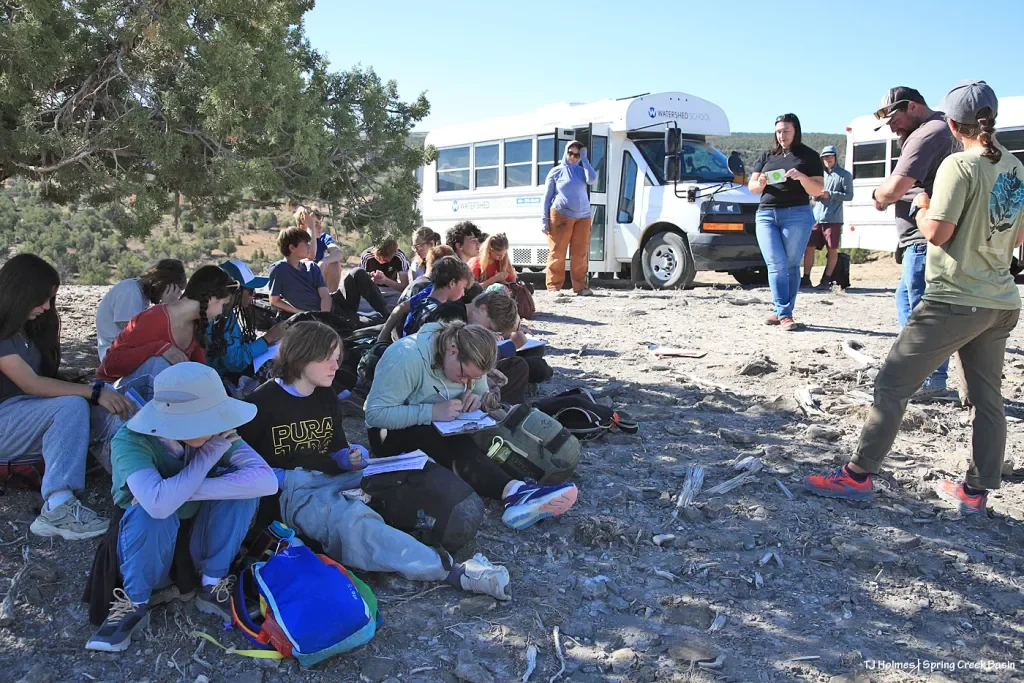
Yes, math does have real-world applications. 🙂 Laura and Anton helped students with the formulas to calculate the results of their utilization (grazed/ungrazed) survey. Results: The horses have plenty of forage, even after our stressful droughty summer.
Kudos to these kids and their teachers for thinking outside the box and creating the experiential learning experiences Watershed School is known for. *I* sure never got to visit wild horses as part of any class trip, and I attended lots of schools in many states and Germany! They are super curious and intelligent and asked some of the best questions I’d ever heard – and I get a LOT of questions and have a lot of answers. Speaking for myself (I’m sure Laura and Anton and Derek would agree): We had a blast introducing these young folks to Disappointment Valley, Spring Creek Basin and (at least a few of) our amazing mustangs. 🙂
You’re welcome back any time!